
Home › Solutions › Abstract management system › Abstract review system
Klobbi Abstract · steps 2 and 3, review and decide
An abstract review system gives each reviewer the abstracts assigned to them and a form for scoring them. In Klobbi Abstract, reviewers see only their own categories, author names stay hidden, and the chair watches the scores arrive in a ranking that the committee decides from. Klobbi's Bangkok team supports it locally.
Platform developed by Klobbi Pte Ltd, Singapore, ISO/IEC 27001 certified · Klobbi (Thailand) Co., Ltd., Bangkok

Figure 1. A clinician reviewing work at a desk. Photo: Freepik.
Committee members at Thai hospitals and universities review between clinics, teaching and their own research. The abstract review system keeps their part short.
Abstracts in a reviewer's categories reach them automatically, author names and affiliations hidden. Nobody receives the whole pile.
Each reviewer sees what is done, what is left and when the review window closes, with a reminder before it does.
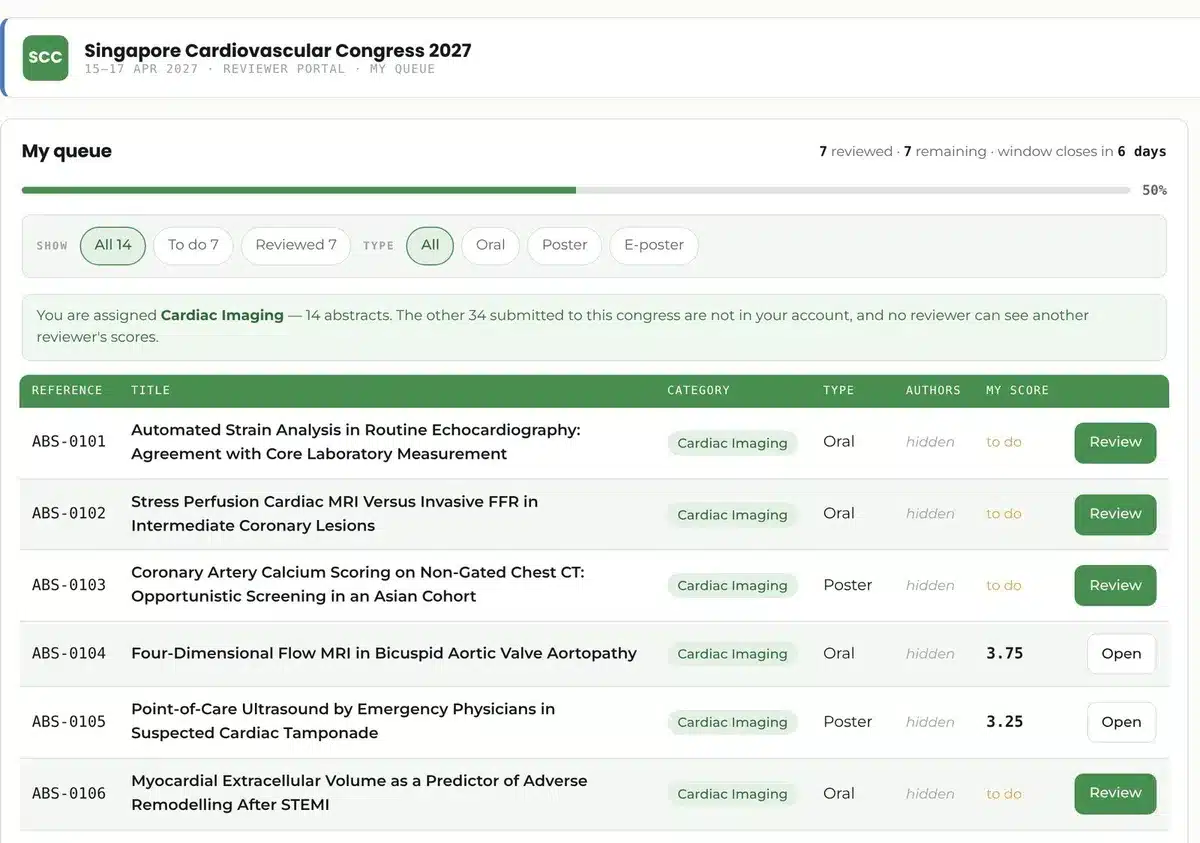
Figure 2. A reviewer's queue: one category, authors hidden. Demo data.
Originality
4
Method
3
Relevance
4
Clarity
5
Example only. Your committee sets its own criteria.
International congresses often invite reviewers from several countries. Wherever they are, reviewers work in the same online system and score on the same criteria, so the committee compares like with like.
Every reviewer signs in to their own queue online.
A number for each criterion, plus a comment the author will read.
No spreadsheets to merge before the committee meets.
While reviews are still coming in, the chair follows progress for each reviewer and each category. When they are in, the committee works from a ranking that shows each abstract's average and every reviewer's score, then accepts or declines each one.
Leads the author back to their portal, where the presenter ticket is now open.
Carries the reviewers' comments, so the author learns from the review.
Both emails go out together, in your committee's wording. Accepted authors then move on to presenter registration.
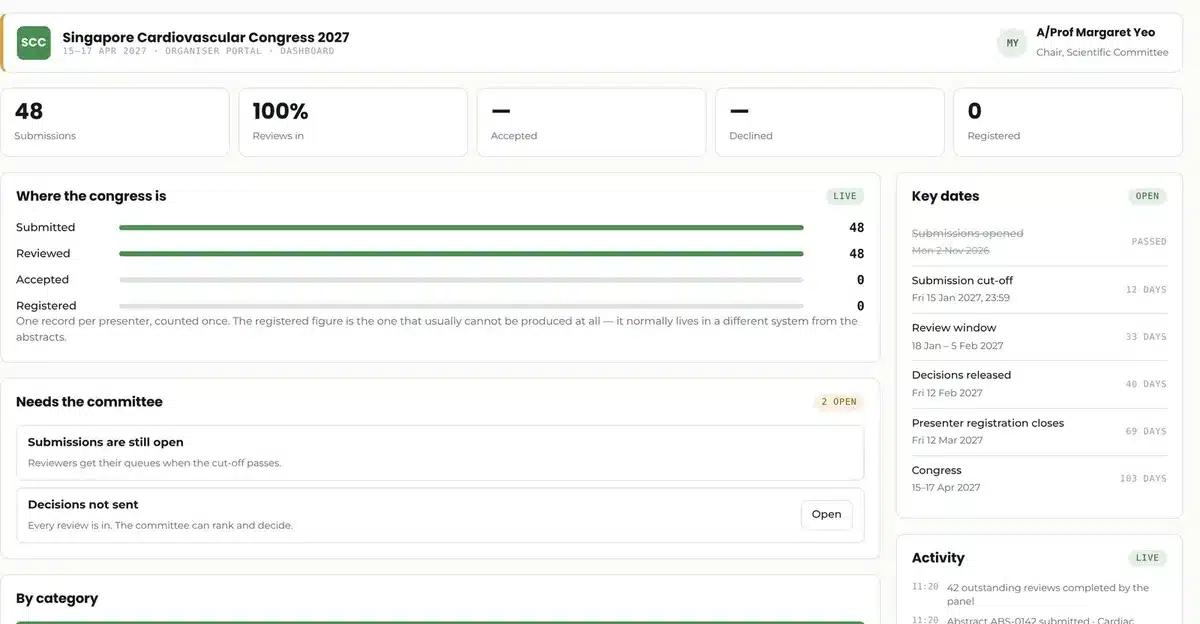
Figure 3. The committee view with the ranking by category. Demo data.
Your project manager goes through these with the scientific committee before the call opens.
Question
What your committee decides
How Klobbi Abstract follows it
Who reviews what?
The categories, and which reviewers cover each one
Abstracts reach the reviewers of their category automatically
How is an abstract scored?
The criteria, such as originality, method and relevance
Each reviewer scores every criterion and adds a comment
What stays hidden?
Whether reviewers may see who wrote the abstract
Author names and affiliations are hidden from reviewers
If your committee runs review rounds or uses other outcomes, tell us how it works, and we confirm the set-up before your call opens. Author details are personal data: under Thailand's Personal Data Protection Act B.E. 2562 (2019), your organisation remains responsible for them, and Klobbi processes them on your instructions.
Can reviewers outside Thailand use Klobbi Abstract?
Yes. Klobbi Abstract is online, so each reviewer signs in to their own queue from wherever they are and scores on the same criteria as everyone else.
Can the chair follow the review in Klobbi Abstract before the window closes?
Yes. Klobbi Abstract shows the chair progress for each reviewer and each category while the scores come in.
The whole call for abstracts in Thailand, on one page.
Read more →The form, each author's login and your cut-off.
Read more →From the acceptance email to the printed badge.
Read more →Search, e-posters and best poster votes.
Read more →Send us your categories, how many reviewers you have and what your committee scores on. On a call we show the reviewer queue and the committee ranking with demo data, and we reply within one working day. Klobbi (Thailand) Co., Ltd. is at Gaysorn Plaza, Ploenchit Road, Bangkok.
Chat on LINE WhatsApp +65 8836 2597