Klobbi’s event registration and payment system lets organisers in Thailand take sign-ups and fees in a single online step. Each payment is tied to the attendee’s record, which then drives the confirmation email, QR ticket, check-in and reports. It suits paid seminars, conferences, training and corporate events, with setup support from our Bangkok team.
It is built for teams tired of running a form in one tool, collecting money in another and reconciling the two in a spreadsheet afterwards. Attendees register online and pay through Stripe (on Klobbi’s Stripe account or your own), by card or with a local payment method that Stripe supports, such as PromptPay (subject to availability), while you keep registration and payment data together.
The link pays off after checkout. A paid booking has to be clear to the attendee, the registration desk and the accounts team. Klobbi connects sign-up to confirmations, QR passes and reconciliation, so each transaction never turns into a separate admin job.
Bangkok team support for events in Thailand, from setup to on-site check-in
Singapore examples: government agencies, universities and companies have used Klobbi registration for national festivals, bilateral conferences and campus events.
It is the paid side of an event registration platform: attendee details, the ticket or pass chosen and the online payment travel together through one flow. Rather than collecting names in one place and emailing a separate payment link, you see in one record who signed up, what they picked and whether they have paid.
Stripe, which takes the payment, is only one piece. What matters to an event team is that the payment result still makes sense when the confirmation goes out, the QR pass is issued, finance checks the transactions and the attendee turns up at the venue.
Two separate tools can cope with a small, single-price event. Add several ticket types, attendee groups, group bookings or finance reporting and the manual work quickly piles up.
Picture the split version: a form collects names and emails, attendees are sent to an unrelated payment page, and someone later lines up a bank or gateway export against the attendee list. Your team is left answering the same questions by hand. Has this person paid? Which ticket? Did the right confirmation go out? Can they receive a QR pass yet? Can finance match the transaction to the booking?
When sign-up and payment share one record, every one of those answers sits in the same data trail.
With split tools, someone matches records by hand. Connected, the payment result stays attached to the right booking.
Split tools can let the ticket chosen and the amount paid drift apart. Connected, the registration type and its fee are set up in one journey.
No separate finance file needed: the event workflow shows each booking and its payment state side by side.
Messages follow the registration and payment journey automatically instead of being a manual side task.
Finance reviews registration and payment together instead of piecing them back together after the event.
We shape the payment journey around how your event actually sells or allocates places. Details vary by event, but the principle stays fixed: registration data and payment data stay linked.
Everything starts with the option that fits the attendee. A conference may offer several delegate categories or pass types; a company programme may mix paid and free places.
The form asks for the details your event needs. Custom fields and separate attendee categories mean not everyone has to wade through one generic form.
If a fee applies, the attendee moves straight to payment inside the same registration journey, so no second record is created that someone must match by hand later.
Payments run through Stripe, on Klobbi’s account or your own: cards and the local payment methods Stripe supports, such as PromptPay (subject to availability). The methods for each event in Thailand are confirmed during setup.
Your team runs the attendee journey without a separate payment spreadsheet. That helps most when you have several ticket types, a mix of paid and free places, or a finance team that needs a clean reconciliation trail.
Klobbi sends personalised confirmations and automated notifications and issues QR tickets, carrying each attendee from online sign-up and payment into event-day communications and systems.
How people pay shapes both their experience and your back-office work. Klobbi lets you set up a registration journey with payment options that suit your audience.
Card payment works for Thai and overseas attendees alike. Card payments run through Stripe as part of the online registration and payment flow, on Klobbi’s Stripe account or on your own.
Stripe also supports local payment methods, such as PromptPay (subject to availability). Tell us while scoping the project and we will confirm which methods can be switched on for your event before registration opens.
Any extra payment method sits alongside the other options in the same registration journey, so you never build a separate sign-up process for one group of attendees.
Available methods, currencies and any provider-specific conditions are confirmed during project setup, not assumed from a generic list.
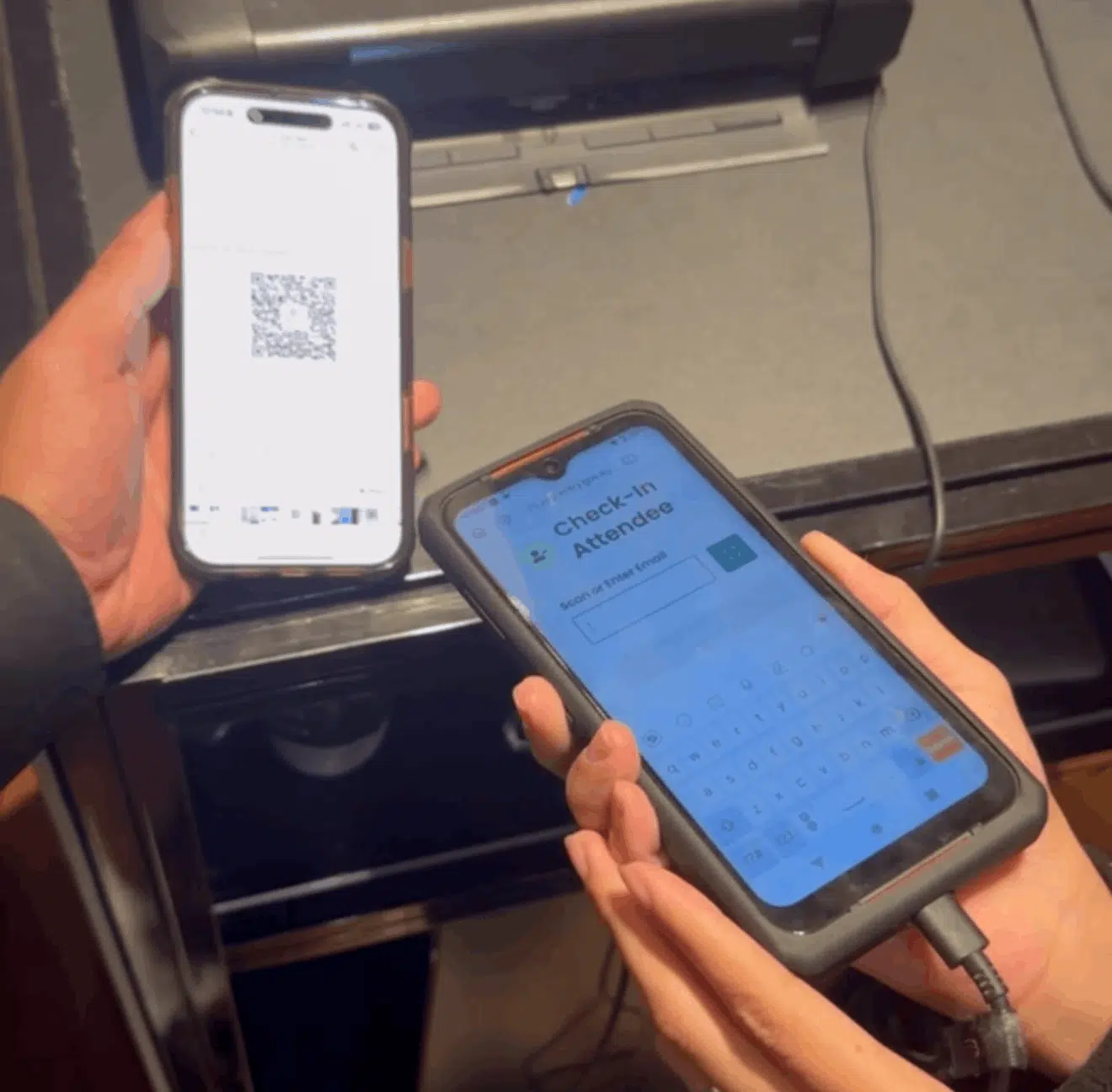
Payment only runs smoothly when it mirrors how your event is set up. The system has to know who the attendee is, what they are booking and whether that option carries a fee.
Klobbi handles multiple ticket types and paid registration. At a conference that may mean several delegate or pass levels. Another event may mix paying guests with free places for speakers, VIPs, staff or invited guests.
What counts is that every option means something clear in practice: the details you need, the fee that applies and what happens to the attendee next.
That works better than bolting pricing on as a separate checkout. The option chosen, its payment state, the confirmation and the event-day handling should all line up.
Not every attendee follows the same payment path. Larger conferences and corporate events often combine paying delegates, complimentary categories and group bookings.
Group registration is part of Klobbi’s current conference registration capability. Each person in a group still keeps their own record, because each may later need a confirmation, a QR pass, a check-in status or a badge.
If a group pays as one, the payment structure is agreed during configuration. The same goes for invoicing, consolidated billing or other finance rules tied to your commercial process. Settle these before launch rather than relying on a generic template.
A successful payment is not the end of the journey. The next question is what the system should do with it.
Klobbi sends personalised confirmation emails and automated notifications and issues QR-code tickets, so the message and pass each attendee receives reflect their own registration.
Trigger rules are set per event. A free place, a paid place and a booking still awaiting payment may each need different handling.
Keep payment status and attendance status apart. Payment tells you about the transaction; QR check-in records whether the person actually arrived. On the day, the same record moves into Klobbi’s QR check-in and kiosk service, where attendance is logged separately from payment. Holding the two apart gives you an accurate picture of what happened before and during the event.
Taking money online only helps if it can be reconciled later. Klobbi’s current payment offering includes reconciliation reporting so the accounts team can match each payment back to the registration data.
Finance rarely needs just a total. They may need to know which booking a payment belongs to, which ticket or registration type it covers and whether it matches the attendee record the event team is using.
With one connected flow, there is far less comparing of attendee lists against payment exports by hand.
Find the attendee or booking behind each payment record.
Tie each transaction to the ticket, pass or registration type set up for the event.
Give event and finance teams the same clear view of each booking and its payment result.
Check that the registration flow carried on as planned.
Work from reconciliation data instead of rebuilding the link by hand after the event.
Plan for the exceptions, not only the successful transactions. Before registration opens, decide what should happen when an attendee starts to register but the payment does not go through, tries again, asks to cancel or qualifies for a refund under your event policy.
These cases reach beyond finance. They can change registration status, confirmations, QR passes, attendee messages and the final numbers.
What can be handled depends on the payment setup and your event rules. Klobbi scopes these requirements during implementation, so nobody has to improvise when an exception happens.
Registration with payment involves two related but separate kinds of data: attendee details held by the registration system, and payment details handled by the payment process. Organisers should understand how both are set up before launch.
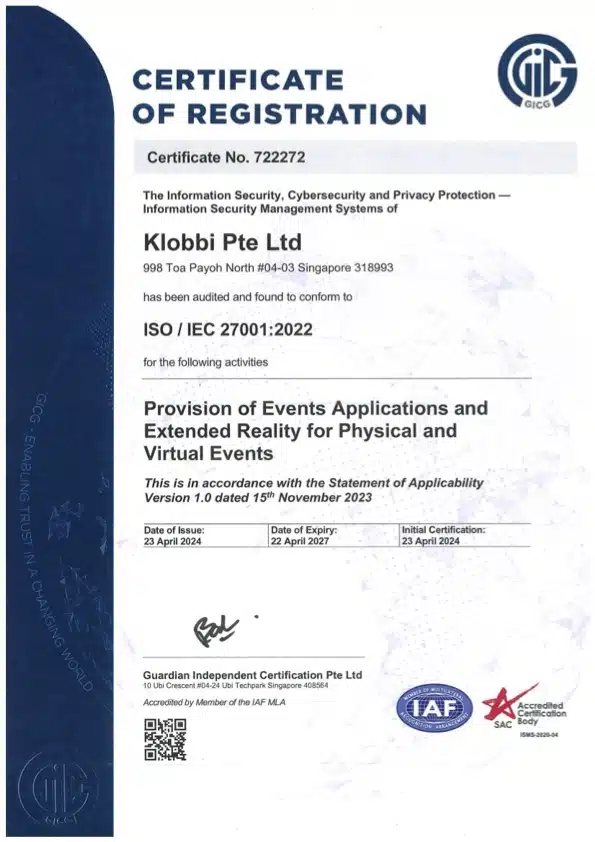
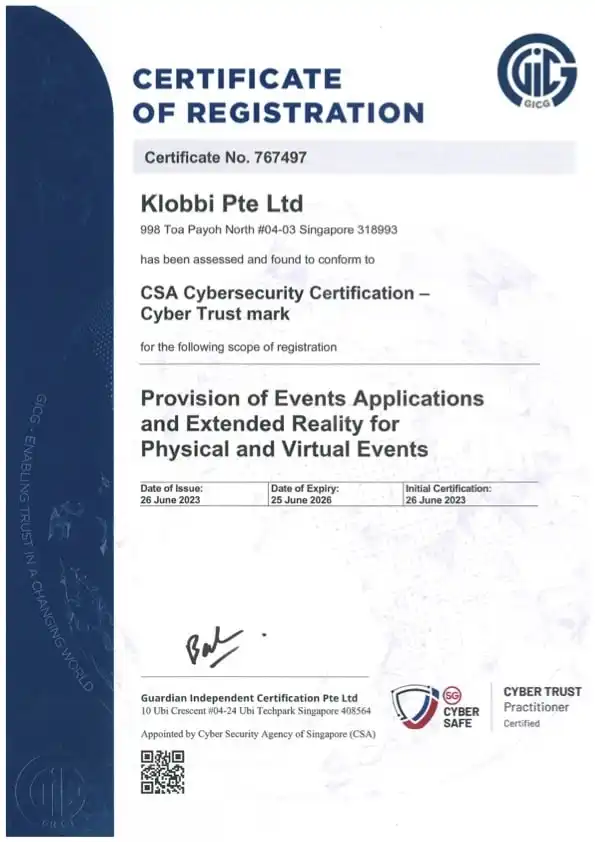
Klobbi Pte Ltd (Singapore), which builds the software, is certified to ISO/IEC 27001:2022 by TÜV SÜD and holds the CSA Cyber Trust mark at Promoter tier. The platform is hosted in Singapore, so data may be stored outside Thailand. Under Thailand’s PDPA (B.E. 2562), the organiser remains responsible for attendees’ personal data and Klobbi processes it on the organiser’s instructions.
For corporate, government, university and hospital buyers, a useful security conversation is specific to the event: what attendee data is collected, which systems exchange it, which payment methods are switched on, who needs access and what documents procurement or the data-protection team require.
Klobbi is not a general payment processor just because payment sits inside registration. The payment-provider set-up and any card-processing responsibilities should be confirmed as part of the technical scope.
ISO/IEC 27001 (Klobbi Pte Ltd)
CSA Cyber Trust Mark
Cyber Security Excellence Awards
Data Protection Essentials (Singapore)
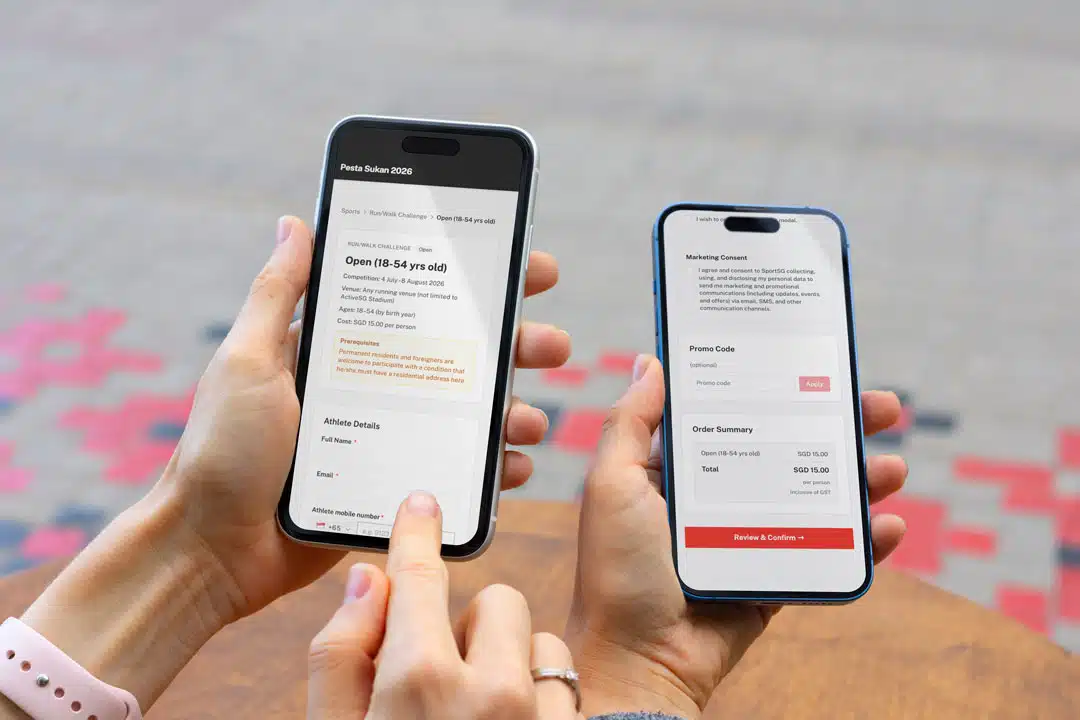
Many attendees sign up on their phones, so payment has to sit inside a clear mobile journey, not a separate process designed for a desktop.
Klobbi’s registration experience is mobile-first. For a paid booking, the route from form to payment to confirmation stays easy to follow, with as few hand-offs as your configuration allows.
The aim is not to hit a target number of fields or screens. It is to ask only what the event truly needs, show the right registration option and make the payment step obvious.
Paid conferences may need several delegate or pass types, group bookings, free categories and a clean link between payment, confirmation and check-in on the day. Klobbi's conference registration system ties all of that into the wider delegate journey.
Company events may combine invited guests, employees, outside participants or paid course places. The fee can depend on the registration category, so not everyone follows the same path.
Shows may run separate registration types for visitors, exhibitors, partners or other approved groups. Where a fee is involved, it stays linked to the attendee or booking record the registration team works from.
When an event in Thailand draws both local and overseas guests, payment through Stripe, by card or a supported local method, keeps paying simple without splitting registration across several systems.
Klobbi is an event technology company, so the point of its payment feature is not just that someone can pay. It is that payment stays part of the registration workflow before and after checkout.
Attendee details, ticket or pass choice and payment are linked steps of one registration process, not separate tools.
Klobbi takes payments through Stripe: cards plus local methods that Stripe supports, confirmed per event for Thai and international audiences.
Payments come with reconciliation reporting, so the accounts team can match each one to the registration workflow instead of rebuilding the link by hand.
Personalised confirmations, automated notifications and QR tickets keep the journey going after payment instead of stopping at checkout.
The same attendee record moves into on-site QR check-in, name search and badge printing whenever those Klobbi services are part of the project.
Our Bangkok team supports events in Thailand locally, helping with configuration, testing and the hand-off between online registration, payment and venue technology, with a named project manager per event. You are not left to wire it together yourself.
Klobbi Pte Ltd (Singapore) holds ISO/IEC 27001:2022 certification and the CSA Cyber Trust mark at Promoter tier, giving procurement teams documented credentials for vendor review.
Yes. Klobbi runs online registration and payment as one connected flow. Attendees enter the details you need and pay with a supported method, and you never maintain a separate payment list.
Yes. Klobbi (Thailand) Co., Ltd. and its Bangkok team support events in Thailand locally, including on-site check-in. The payment methods available for an event in Thailand are confirmed during setup.
Klobbi takes payments through Stripe: cards and the local payment methods Stripe supports, such as PromptPay (subject to availability). The methods for an event in Thailand are confirmed during setup, before registration opens.
Yes. You can split an event into several registration or attendee categories, some with a fee and some free. The rules are set up around your ticket, pass and attendee model.
The flow is designed so each payment outcome stays attached to its registration. Your event and finance teams can see the link between the attendee, the registration type and the payment state.
Yes. Klobbi's current payment offering includes reconciliation reporting to help accounts teams match payments back to registration data. The exact fields and export format are confirmed per project.
Yes, group bookings are supported, and the payment structure for a group is defined during setup. Depending on your needs, the project may separate the person making the booking from each attendee in it.
Agree the handling before launch. A failed or incomplete payment can affect registration status, confirmation and later messages, so your team defines the expected flow with Klobbi during configuration.
Refunds and cancellations depend on the payment setup, the payment provider and your event policy. If refunds are needed, include them in the project scope before registration opens.
Klobbi's registration platform can be reached from abroad and takes card payments through Stripe. Confirm the payment methods and currency that suit your audience during setup.
The same registration record carries into the QR ticket and on-site check-in. Payment status and attendance status stay separate: one covers the transaction, the other records whether the attendee actually arrived.
Tell us your event date, size and how attendees will register or pay. We reply within one working day.