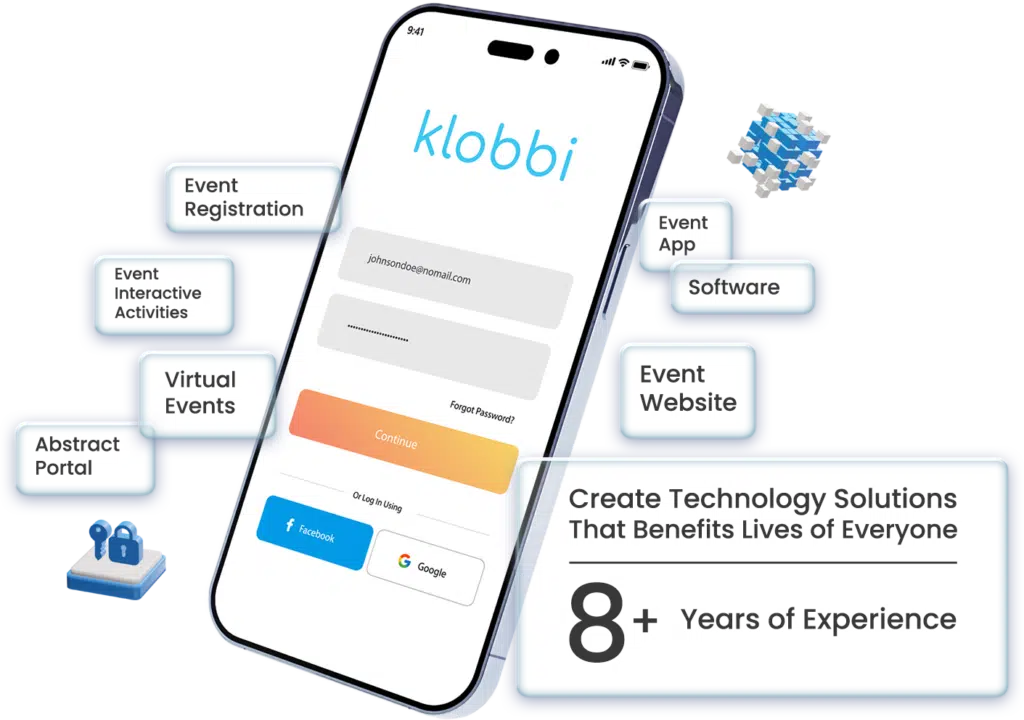
Klobbi’s conference registration system in Thailand handles delegate sign-up, pass types, session choices, card payment and QR confirmations in one place, then reuses the same data for check-in, badges and attendance reports. It is built for universities, hospitals, associations and professional conference organisers, with Thai and English registration and a Bangkok team on hand.
A congress is never just a list of names. Delegates arrive with different passes, fees, days, workshops and access rights, and the organising committee still needs a single, reliable view of who has booked and, later, who has actually turned up.
You are not handed an empty platform to configure alone. A Klobbi project manager helps with set-up, testing and the technical hand-over to on-site check-in and badge printing.
Already relied on by Singapore government agencies, universities and corporate conference organisers.
These logos are Singapore clients, from national festivals to international meetings and campus events. Our Bangkok team brings the same platform to conferences held in Thailand.
A sign-up form is fine for a half-day seminar. A three-day congress is another matter: general delegates, speakers, students, association members, VIPs and crew; early-bird and standard rates; paid and complimentary places; parallel workshops; company group bookings; dietary and access needs; and a morning rush when hundreds of people must be verified before the opening plenary.
Put simply, a conference registration system is the software and connected process that manages delegate sign-up, pass types, attendee details, payment, confirmation and attendance on the day. Depending on the event, it also links registration to session choices, QR passes, check-in, badges and post-event reports.
Klobbi treats the form as step one of a longer chain. What really counts is whether the details captured at sign-up still serve you when delegates need joining instructions, reach the venue, collect a badge, move between rooms and appear in the final attendance figures.
A simple form can gather names and contact details. A conference registration system carries structured delegate data through passes, sessions, payment and the on-site operation.
| What the congress needs | Simple sign-up form | Klobbi conference registration |
|---|---|---|
| Several delegate categories | One shared form plus manual fixes. | Custom fields and categories for delegates, speakers, VIPs, students, members, staff and any other group. |
| Several pass types | Limited, or managed outside the form. | Pass types set up around delegate categories and paid registration. |
| Group bookings | A side spreadsheet or merging by hand. | Group bookings with each delegate's own details captured in the agreed workflow. |
| Workshop and track choices | Collected in another tool or list. | Breakout and session preferences captured at registration. |
| Payment | A separate payment link and later reconciliation. | Registration and online card payment in one delegate journey. |
| QR check-in on arrival | Another check-in system and a fresh data import. | Registration data linked straight to QR check-in, name search and walk-ins. |
| Badge data | Exported or retyped for a separate badge process. | Badges printed on demand from details already in the system. |
| On-site technology and support | Usually none. | The same project extends to check-in, badge printing and event-day support, with a Bangkok team for events in Thailand. |
One shared form plus manual fixes.
Custom fields and categories for delegates, speakers, VIPs, students, members, staff and any other group.
Limited, or managed outside the form.
Pass types set up around delegate categories and paid registration.
A side spreadsheet or merging by hand.
Group bookings with each delegate's own details captured in the agreed workflow.
Collected in another tool or list.
Breakout and session preferences captured at registration.
A separate payment link and later reconciliation.
Registration and online card payment in one delegate journey.
Another check-in system and a fresh data import.
Registration data linked straight to QR check-in, name search and walk-ins.
Exported or retyped for a separate badge process.
Badges printed on demand from details already in the system.
Usually none.
The same project extends to check-in, badge printing and event-day support, with a Bangkok team for events in Thailand.
Delegates seldom share a single route through registration. A useful platform lets organisers shape the experience around who the delegate is, what they are booking and what that group must tell you.
Each role brings its own data needs. A general delegate may give organisation, position, dietary needs and preferred sessions. A speaker may need other fields and briefing notes. A student or member may be entitled to a different pass, while VIPs or staff may need their own category.
Klobbi supports custom fields, categories and forms for each type of attendee, so registration asks for what is relevant without pushing every delegate through one oversized form.
You end up with cleaner delegate data and a path that is easier to follow, plus a firmer base for later messages, check-in and badges, because each person sits in the right category from the start.
Registration should mirror how the congress is sold or allocated. Klobbi supports multiple ticket types and paid registration, so organisers can offer the options their event really has.
That might mean separate passes for standard delegates, speakers, students, members, VIPs or other approved groups. Where rates or access rules differ, the delegate should see their choice clearly before paying and confirming.
The point is not more ticket types for their own sake. Each pass needs a reason to exist and should map neatly to the data, payment and on-the-day process behind it.
Group bookings take more planning than individual sign-ups, because one organisation may book several delegates while the congress still needs an accurate record for every person.
Klobbi supports group bookings for conferences. During set-up, agree which details each delegate must provide, how the booking links to payment and how individual confirmations or QR codes are issued.
It pays off later: when delegates from the same group arrive separately, the desk can still find the right person, status and badge without a separate group spreadsheet.

Multi-day, multi-track meetings are where a dedicated system clearly beats a generic sign-up page. Organisers need to know not only who is coming, but on which days and to which tracks or workshops.
Klobbi’s conference workflow captures breakout and session preferences alongside each delegate’s registration, so programme data never has to be rebuilt on a separate list.
Settle the practical questions early. Does every pass cover the whole congress, or are there day passes? Do delegates pick workshops when they register? Can some categories join activities that others cannot? What will the desk need to know when someone comes back on day two?
Those answers shape the form, the pass structure, confirmations and the on-site process. They also shape reporting, because a scientific committee may need registrations and real attendance split by day or by session.
A sound system therefore treats the programme as part of the registration logic, not as a separate PDF. The aim is not to make sign-up harder, but to ask only for the choices that genuinely affect the delegate experience or the running of the event.
For many delegates, the conference website is the first part of your event they actually use, so it should do more than host a form.
Klobbi can build a fully customised event microsite in your conference branding, bringing the essentials together behind one front door: programme, speaker biographies, FAQs and registration, with phone-friendly forms designed around what your congress needs to know.
For international and regional meetings, the platform supports multi-language registration where required, so a Bangkok congress can run its forms in Thai and English side by side.
Keeping the programme next to registration saves delegates from jumping between pages before choosing a pass or workshop, and gives organisers a single place to update the information people look for before they book and before they travel.
If you also need a broader event website, Klobbi can extend the same look beyond registration while keeping the delegate’s path clear from browsing the programme to signing up.
Registration software works best when it is set up around the real requirements of your congress. Klobbi combines its event registration platform for Thailand with hands-on implementation, so your committee's rules become a working registration, data and on-site workflow.
We start with the event: dates, expected numbers, delegate categories, pass model, payment rules, workshops, website content, links to abstracts or speakers, and what must happen when delegates arrive. That stops the form being designed in a vacuum.
Klobbi configures the registration page, custom fields, categories, ticket types, branding, confirmations and payment. If a conference website is part of the project, programme, speakers and registration live in one delegate-facing experience.
Tests mirror the people who will really register. Speakers, students, general delegates and VIPs may follow different paths; paid and complimentary bookings must behave correctly; confirmation emails and QR codes are checked; and the hand-over to the venue is rehearsed before launch.
Once registration is live, organisers follow bookings in real time instead of swapping spreadsheet versions. Klobbi's project team stays involved and helps adjust the set-up as the programme evolves.
If you use Klobbi's on-site check-in and badge printing, the same set-up carries straight into QR check-in, name search, walk-ins and badges, so the desk works from data prepared in advance. In Thailand, our Bangkok team can manage on-site check-in.
After the congress, registration and attendance data feed the agreed reports and follow-up, giving organisers a clear view of who booked, who came and how the event performed.
Delegates should never wonder whether their booking went through. Once they register, they need a clear confirmation, a pass that works on the day and the information to arrive prepared.
Klobbi sends personalised confirmation emails, automatic notifications and QR-code passes as part of the registration flow, so key details stay attached to each delegate record rather than being sent by hand from unrelated tools.
A speaker needs different joining notes from a general delegate. A workshop participant needs to know which room to find. An overseas delegate flying into Bangkok needs venue details before travelling. The closer those messages sit to registration data, the easier it is to send the right information to the right people.
For the delegate, the path becomes simple: register, receive confirmation, keep the QR code and arrive knowing exactly what they have booked.
Registration is usually one part of a wider technology stack. Klobbi connects it with neighbouring software and on-site tools, while each specialist workflow keeps its own job.
For fee-paying congresses, Klobbi supports online registration with payment in the same journey: delegates pay by card through an online payment gateway right after completing the form.
Registration type, payment and confirmation should read as one transaction, so your team never has to match a payment sheet against a separate delegate list before confirming someone.
Gateway, invoicing and reconciliation details should be scoped per event, because finance processes differ from one organiser to the next.
Academic, medical and research meetings often run a content workflow before delegate registration opens. Klobbi offers a separate abstract management system for Thailand covering submission, peer review, scoring and programme content.
Organisers can plan abstracts and registration within one ecosystem while keeping the stages distinct: abstracts are submitted and reviewed first, then registration handles each delegate's pass, payment, confirmation and attendance.
For accepted authors and presenters, the aim is a smooth step from the programme to the registration details the congress still needs from them.
The registration record becomes operational when delegates reach the venue. Klobbi covers QR scanning, name search, live attendance and walk-ins through its self-service check-in kiosks and on-site workflow.
Arrivals are never evenly spread; a large share of delegates may appear just before the opening keynote. Linking the registration database to QR check-in lets the desk find people quickly without leafing through printed lists.
Klobbi's on-site kit also has an offline mode with local syncing for venues where connectivity is a concern, so registration can be planned with the realities of hotel ballrooms, exhibition halls and peak arrival times in mind.
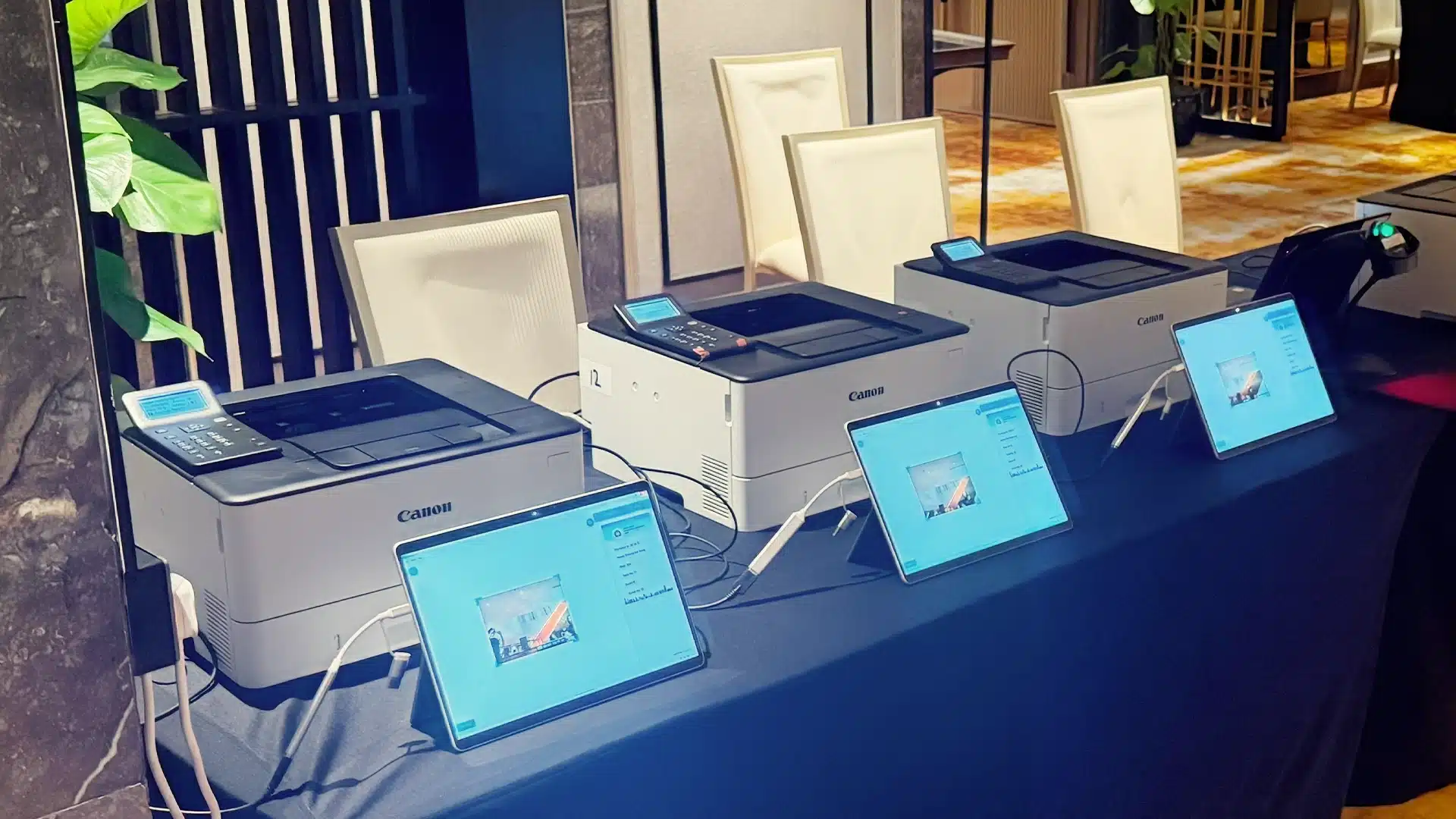
Where physical credentials are needed, Klobbi's badge printing service in Thailand produces personalised badges as delegates check in. Templates follow your branding and use details already held in the registration system.
Printing on arrival removes the need to print and alphabetise every badge in advance, and makes late changes and walk-ins much easier to handle.
Klobbi supports several badge materials and links event-day printers to registration and check-in, so you can choose formats that suit the length of the congress, the branding and the delegate experience.
Registrations show intent. Attendance shows what actually happened.
A good system gives organisers a clear picture of the delegate journey before, during and after the event.
Beforehand, the useful figures are bookings, delegate categories, pass types, registration status and, where relevant, payment status.
On the day, attention turns to arrivals, QR scans, walk-ins and live attendance. Where scanning happens at room doors, attendance can be followed track by track or workshop by workshop.
Afterwards, you can compare bookings with real attendance and export what you need for reports or follow-up, which may include day-by-day or session figures as well as the final delegate list, depending on the agreed set-up.
This matters because one headline total can hide very different outcomes. Knowing that 1,000 people registered is useful; knowing how many came, when they arrived and which sessions they joined is far more useful when you plan next year’s congress.
Good reporting separates what organisers need ahead of the event, what the operations team needs on the day, and what the final report should show.
Bookings; delegate categories; pass type; payment or registration status; workshop selections where set up.
Confirms demand, exposes gaps in the data and gives the team a clean list before doors open.
QR scans; walk-ins; attendance status; badge issues; day or session attendance where set up.
Shows what is happening on site and gives the desk a live view of arrivals and exceptions.
Final attendance; no-shows; day or session breakdowns where set up; delegate export; agreed payment reports.
Turns registration data into a post-congress record for follow-up, reconciliation and next year's planning.
How registration works depends on the congress. Klobbi configures the workflow around your event instead of squeezing every organiser into one template.
Scientific and healthcare meetings may combine delegate registration with speakers, abstracts, poster or oral presentations and parallel tracks. Registration often has to tell students, members, speakers and general delegates apart while collecting professional, dietary, access or session details.
Klobbi's separate abstract management system handles submission and peer review, while conference registration manages the delegate journey.
Association congresses may need member and non-member rates, group bookings, several pass types and multi-day attendance. The structure should make those differences clear without confusing returning members or first-time delegates.
Company conferences may bring together staff, customers, partners, speakers, VIPs and invited guests, and usually need branded registration, controlled categories and a strong hand-over to check-in and badges. Klobbi supports CRM, SSO and other integrations where required; see also corporate meeting registration in Thailand.
Public-sector organisers often need a supplier that can meet formal security, procurement and event-day requirements. Klobbi combines a Bangkok team for events in Thailand, software from a security-certified Singapore company and on-site registration capability, with data, access and integration details documented during scoping.
Conference registration involves personal data, and larger institutions often need to check how a supplier handles data, integrations and access before signing off.
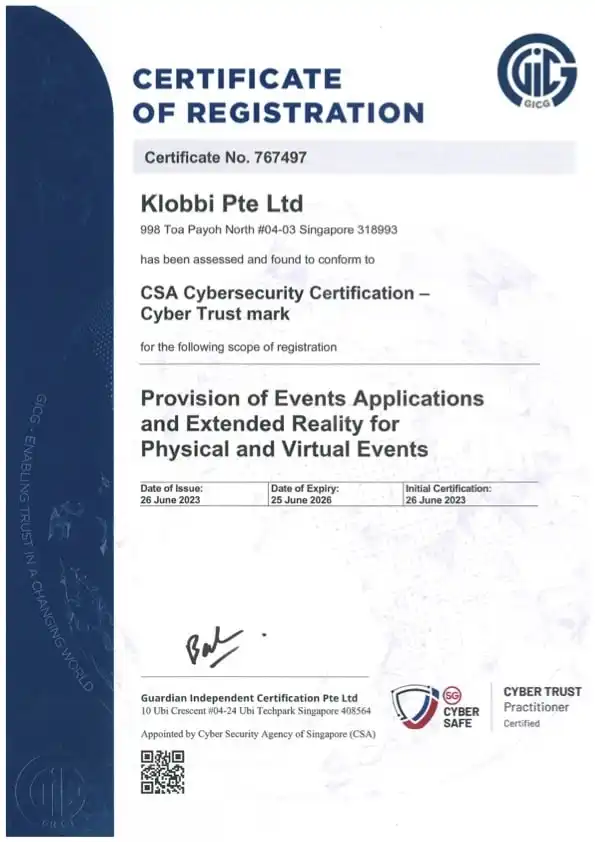
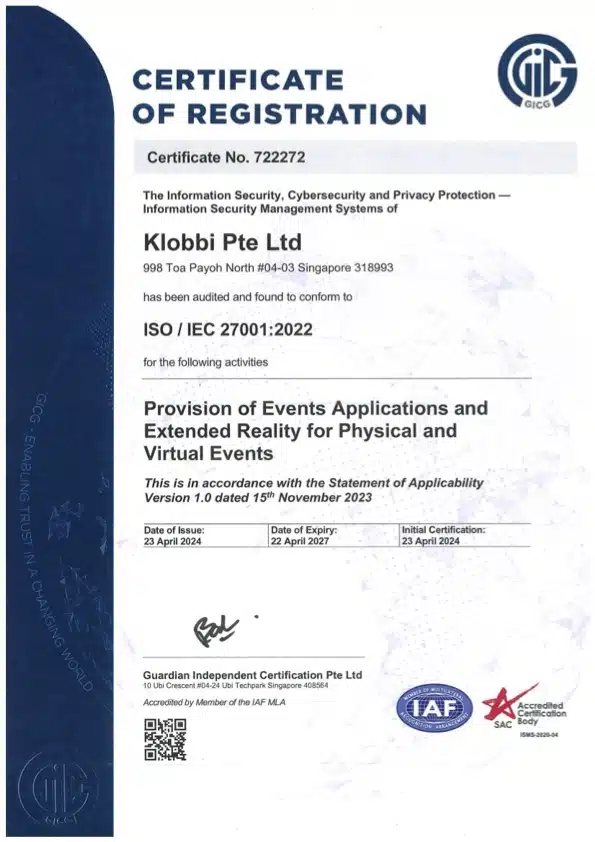
The software is built by Klobbi Pte Ltd in Singapore, which is certified to ISO/IEC 27001:2022 by TÜV SÜD and holds the CSA Cyber Trust mark at Promoter tier. The platform states that attendee information travels over encrypted channels; it is hosted in Singapore, so data may be stored outside Thailand. Under Thailand’s Personal Data Protection Act B.E. 2562 (2019), you as organiser remain responsible for attendees’ personal data, and Klobbi processes it on your instructions.
For a conference, security is best discussed through the real workflow: which delegate details are collected, which systems exchange data, who needs access, what must be available on site and what documents your procurement or data protection team expects.
Klobbi can link registration with CRM, payment systems, SSO and other tools where required. The exact integration and data-handling design should be agreed during scoping, not assumed from a generic feature list.
For more detail, see Klobbi’s event registration data security page for Thailand.
ISO/IEC 27001 (Klobbi Pte Ltd)
CSA Cyber Trust mark
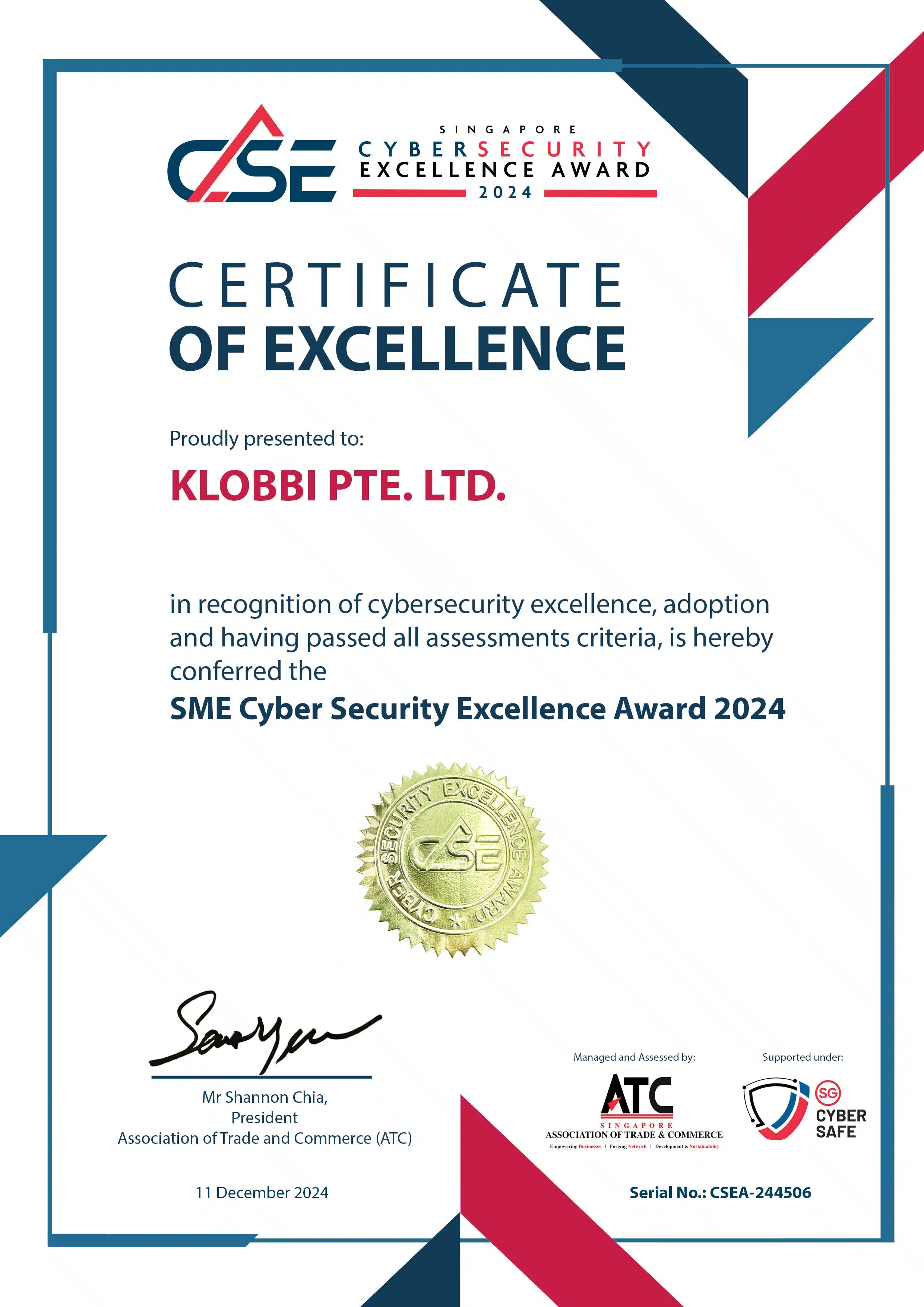
Cyber Security Excellence Awards
Data Protection Essentials (Singapore)
Plenty of platforms can take conference bookings. Klobbi's difference is the team behind the software: people who configure, test, integrate and hand over to event-day check-in and badges, with a Bangkok team for congresses held in Thailand.
Klobbi's Bangkok team supports events in Thailand locally, including on-site check-in management, while the software is developed in Singapore. Organisers reach the team directly on LINE or WhatsApp rather than through a self-service ticket queue.
A dedicated project manager guides the implementation. Klobbi configures the registration set-up, tests it with your team and supports the technical hand-over when the congress moves on site.
Conference microsites, custom forms, payment, QR passes, check-in and badge printing arrive as connected parts of one project, with software, hardware and on-site staff in a single bundle if you wish, cutting the number of hand-overs you have to manage.
Klobbi supports multiple attendee types, tiered passes, breakout sessions, group bookings, a branded registration website and high-volume QR check-in: real congress needs rather than generic feature labels.
The ISO/IEC 27001:2022 certificate and CSA Cyber Trust mark held by Klobbi Pte Ltd, the Singapore company that builds the software, give universities, hospitals, government bodies and corporates a firmer starting point for vendor and procurement reviews.
If you already use CRM, SSO, payment or other business systems, Klobbi scopes integrations around the event instead of asking your team to run a disconnected data process.
A good system should make the delegate’s path easier while giving organisers firmer control of operations.
One Singapore example is the Singapore Allied Health Conference 2026 website, hosted on a Klobbi subdomain. It brings together the programme, speakers, abstracts, sponsorship and exhibition information and a direct route to registration, showing why registration works better inside the programme than on an isolated form.
Klobbi’s published Singapore portfolio also includes registration for government agencies, universities and corporate organisers. The goal is always the same: make registration part of the operation, so the details gathered beforehand still work when delegates arrive. To plan a congress in Thailand, contact Klobbi or message us on LINE or WhatsApp; we reply within one working day.
It is software for managing delegate sign-up, attendee details, pass types, payment, confirmations and attendance at a conference. For multi-day or multi-track events it also links registration to session choices, QR check-in, badge printing and reporting.
Klobbi supplies the platform together with hands-on configuration, testing and technical set-up: forms, delegate categories, pass types, payment, confirmations, QR check-in and badges. A named project manager leads the work, and the Bangkok team supports congresses held in Thailand.
It should fit your congress rather than a fixed checklist. Common needs are custom delegate forms, attendee categories, several pass types, payment, confirmation emails, QR passes, a branded registration website, check-in, badges and attendance reporting.
Yes. Klobbi supports custom forms, fields and categories for each registration type, so you can ask delegates, speakers, VIPs, students, members and staff for different information.
Yes. Klobbi's conference workflow supports breakout and session preferences. The detailed design should follow your programme, because room access, capacity and attendance rules differ from event to event.
Yes. Klobbi supports group bookings for conferences. Agree during set-up which details each delegate gives, how payment works and how individual confirmations or QR codes are issued.
Yes. Klobbi builds custom event microsites with programme, speaker biographies, FAQs and registration, acting as the delegate's front door for both information and booking, with Thai and English versions where required.
Yes. Klobbi offers a separate abstract management system for collection, peer review, scoring and display. For academic and medical congresses, abstracts and registration can be planned together while each system keeps its own role.
Yes. Klobbi links online registration data to QR check-in and on-demand badge printing, so the same delegate information is used when people arrive instead of a new list being made at the venue.
The software is built by Klobbi Pte Ltd in Singapore, certified to ISO/IEC 27001:2022 by TÜV SÜD and holding the CSA Cyber Trust mark at Promoter tier. Under Thailand's PDPA, you as organiser remain responsible for delegates' personal data and Klobbi processes it on your instructions. The platform is hosted in Singapore, so data may be stored outside Thailand.
Tell us your conference date, number of delegates and ticket types. We reply within one working day.