
How to follow up after exchanging business cards
A practical guide from Klobbi in Singapore.
30-day free trial, no credit card. Bringing a team? Talk to us
To follow up after exchanging business cards, note who you met and what you discussed, send a short personal message while the conversation is fresh, and set a reminder for the next step. Exchange, the digital business card from Klobbi, keeps these in one place: captured contacts land in a workspace with a pipeline, notes and reminders.
Why have a follow-up routine?
We suggest deciding before you meet anyone how you will record each contact, what you will send and when. A routine like that means you are not relying on memory a week later.
The steps below make a simple routine. They work with paper cards too, and they are easier to keep up when the contact, your notes and your reminders sit in one place.
How do you follow up after exchanging business cards?
Capture the contact on the spot
If you share an Exchange digital business card with lead capture switched on, people who choose to unlock it give you their name and email, and the contact goes straight into your workspace. With paper cards, keep them together and write a word or two on the back. Deciding between the two? See our paper vs digital business card comparison.
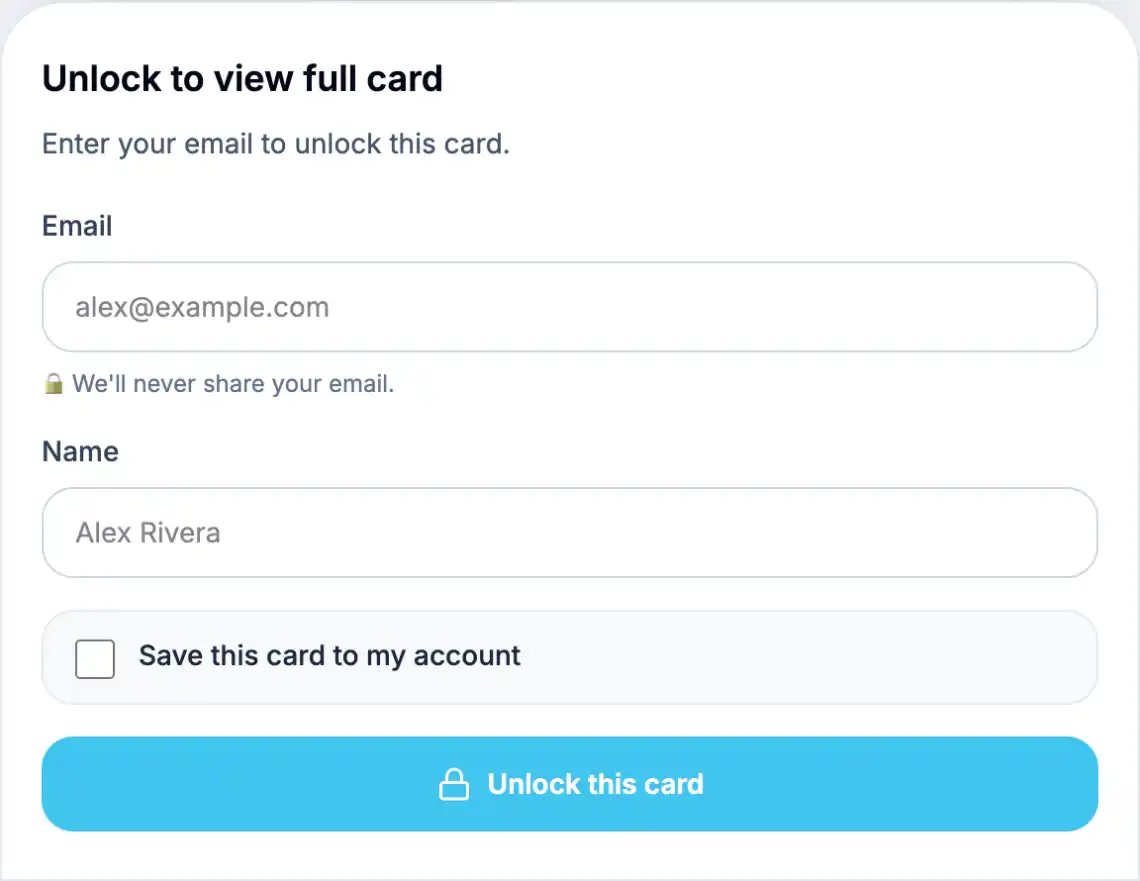
With lead capture on, this is where a visitor chooses to give their name and email. Sample screen; the name is made up. Write down what you talked about
Add a note while you still remember: what they need, what you promised, and anything useful they mentioned. In Exchange, notes sit on the contact in your workspace.
Send a short, personal message
Say where you met and mention one thing from the conversation. Keep it brief and suggest one clear next step, such as a call or sending some information.
Set a reminder for the next step
Decide when you will check in again and set a reminder, so a promised call does not slip.
Keep your pipeline tidy
Move each contact along your pipeline as things progress, so you can see at a glance who is new and who needs a nudge.

What should a follow-up message say?
We suggest keeping it short and specific. Here is a sample:
Hi Mei, it was good to meet you on Tuesday. You mentioned you are refitting two meeting rooms next quarter, so I have attached our timber samples.
Would a short call next week help? Best, Tomás
It names the meeting, recalls one detail, offers something useful and asks one simple question.
When should you follow up?
There is no fixed rule. Send a first message a day or two after meeting, while the conversation is still fresh for both of you. After that, follow the pace the other person sets. If they say “talk in the new year”, set a reminder for then rather than chasing sooner.
How does a team share follow-up?
If several people meet contacts for the same company, an Exchange team workspace gives everyone a shared lead pipeline and reminders, with roles, permissions and assignments. See digital business cards for teams, or read about Exchange, the digital business card from the start.
Frequently asked questions
How soon should I follow up after meeting someone?
Send a first follow-up a day or two after meeting, while the conversation is fresh. After that, match the other person's pace and set a reminder for the next step.
What should I put in a follow-up message?
A good follow-up message says where you met, mentions one thing you discussed and suggests one clear next step, such as a short call. Keep it brief and personal.
How does Exchange help me follow up on new contacts?
Exchange, Klobbi's digital business card or digital name card, can capture the name and email of people who choose to unlock your card. The contact lands in your workspace, where you can add notes, move it along a pipeline and set reminders.
Does this follow-up routine work with paper business cards?
Yes. The same routine works with paper cards: keep them together, write a note on the back, send a short message and set a reminder. It is easier to keep up when the contact, your notes and your reminders sit in one place.
Make follow-up part of your card
Try Exchange free for 30 days, with no credit card.