
Home › Solutions › Abstract management software
Klobbi Abstract · for scientific and medical congresses
Abstract · Klobbi Abstract, abstract management software and presenter management
Background. Most calls for abstracts still run on email and spreadsheets. Versions multiply, every reviewer receives the whole pile, and accepted presenters are typed again into registration.
Methods. Authors submit through a portal built for your congress. Each abstract goes to the reviewers of its category with author names hidden, and is scored on your committee's criteria.
Results. The committee works from a live ranking and sends its decisions together. Accepted presenters buy a presenter ticket in the same portal, with their details already filled in.
Conclusion. One record per abstract, from submission to a printed presenter badge at check-in, set up and run with a named Klobbi project manager.
Keywords: abstract submission portal · blind abstract review · presenter management · online abstract book
★★★★★ Trusted by 5000+ events, including government agencies, universities and corporate conferences · ISO/IEC 27001 certified · CSA Cyber Trust mark
Figure 1. Results presented to a congress session. Photo: Freepik.
Scientific and medical congresses in Singapore have run their calls for abstracts on Klobbi, each with its own submission page in the congress's branding.

SAHC 2026
Singapore Allied Health Conference, 28 to 29 October 2026
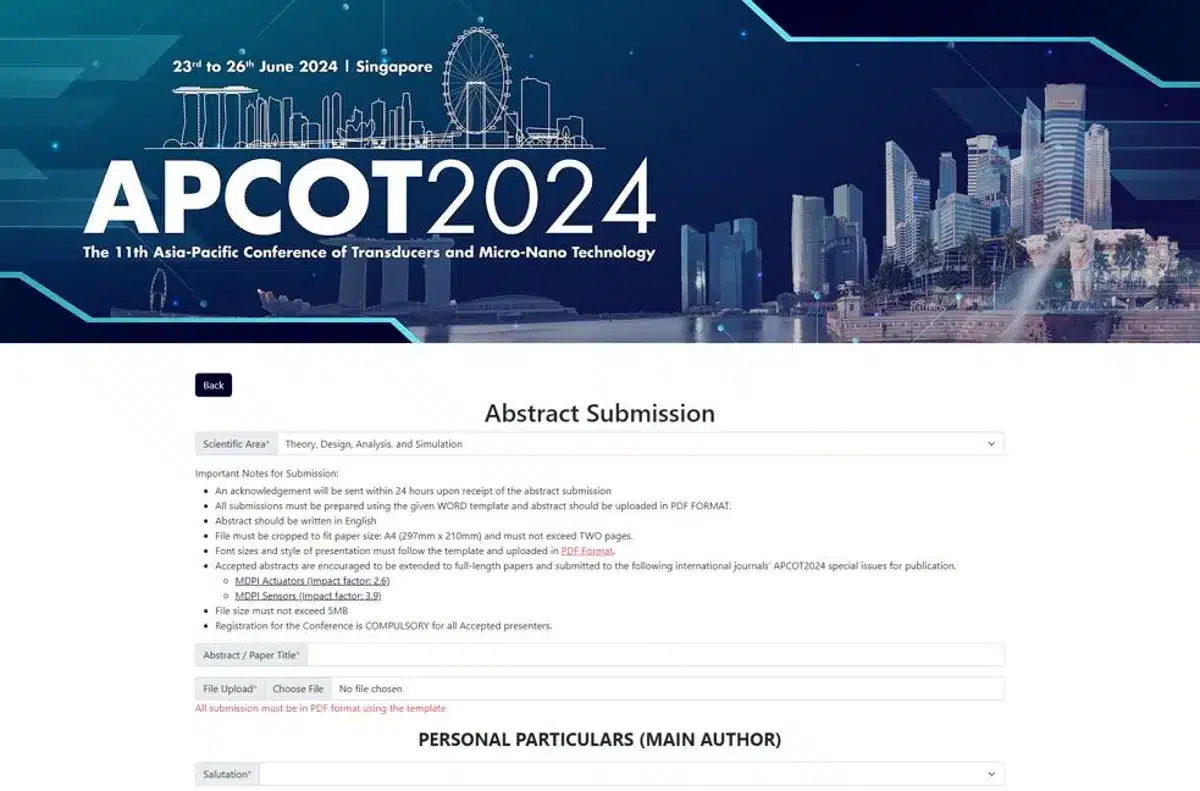
APCOT 2024
11th Asia-Pacific Conference of Transducers and Micro-Nano Technology, Singapore, June 2024
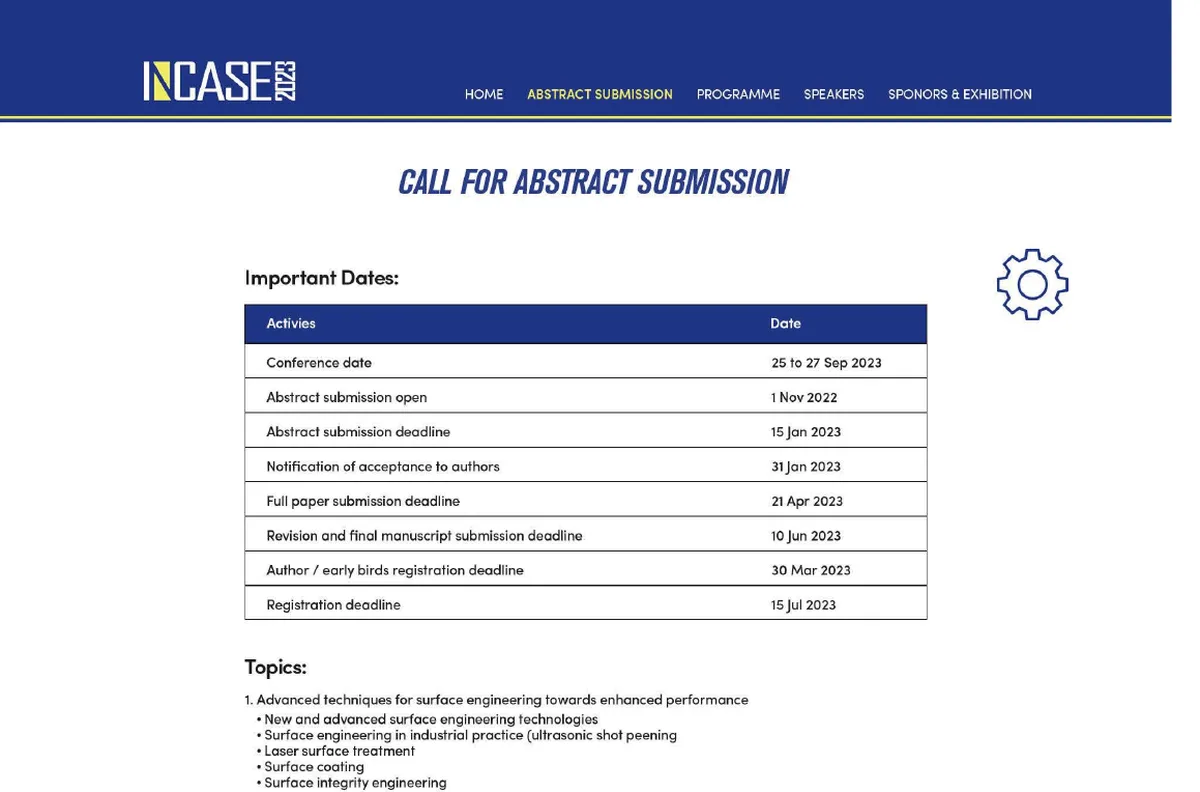
INCASE 2023
Call for abstract submission, with important dates, topics and the submission form
Also on Klobbi: SICC-12, Singapore International Chemistry Conference 2024 · NHG Eye Conference 2024 · CAPE Allied Health Congress 2023
A call for abstracts usually starts in an inbox. These are the five places where that goes wrong, and what changes when the same work runs in an abstract management system.
Table 1. Email and spreadsheets compared with Klobbi Abstract, stage by stage.
Stage
Email and spreadsheets
Klobbi Abstract
Submissions
Attachments arrive by email and are collated again after every edit
One record per abstract, which the author edits until the cut-off
Reviewer access
Every reviewer receives the whole pile
Reviewers see only their own categories, with author names hidden
Scores
Spreadsheets merged by hand before the committee meets
Scores and comments tracked live and ranked by category
Decisions
Acceptance and decline emails written one by one
Decision emails sent together, declines carrying the reviewers' comments
Registration
The accepted list is typed again into registration
Accepted presenters buy a presenter ticket in the same portal, synced to check-in and badges
Each abstract's record is created once, at submission. Reviewers score it, the committee decides on it, the presenter pays against it and the badge printer reads from it.
1
Author
A portal and form built for your event. Presenters edit and update their submissions until the cut-off date.
2
Reviewers
Each reviewer sees only their own categories, with author names hidden, and scores against your criteria.
3
Committee
Accept or decline. Klobbi sends the confirmation or declination email, with the reviewers' comments.
4
Presenter
Accepted presenters return to the portal and buy a presenter-tier ticket at the presenter rate.
5
On-site team
Every presenter ticket syncs to Klobbi's check-in: QR code, scan, check-in and a printed badge. Delegates come in through your conference registration, on the same list.
One record: abstract → scores → decision → ticket → badge
Authors, reviewers and the committee work from the same records, and each sees only what their role needs.
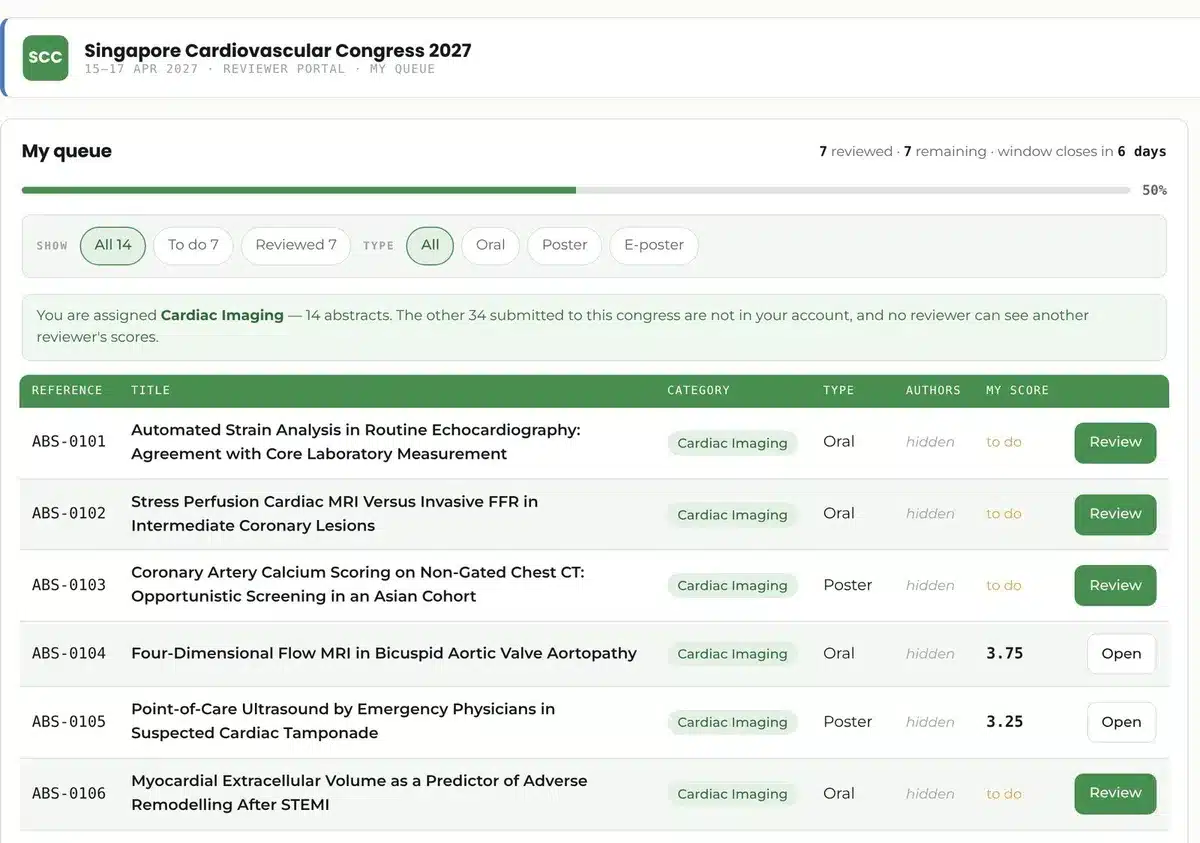
Figure 2. Reviewer portal. The reviewer's queue holds only their category; the other abstracts are not in their account.
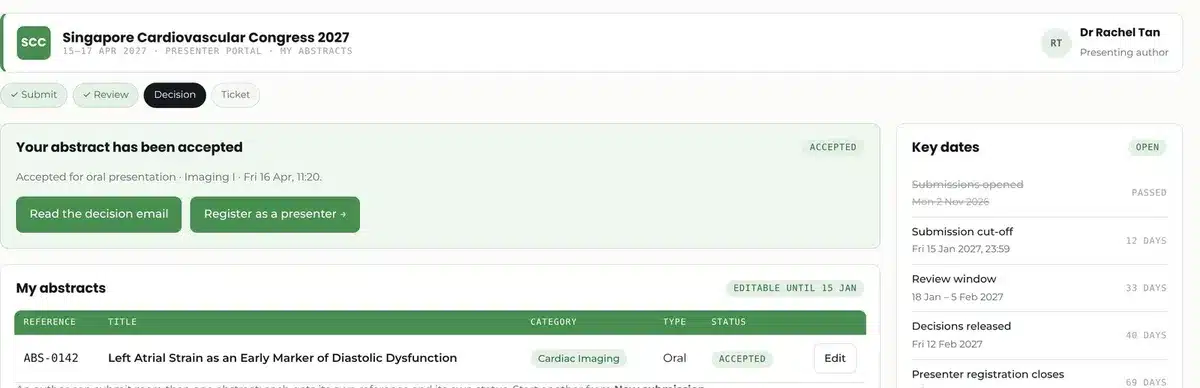
Figure 3. Presenter portal after the decision: the acceptance, and the way into presenter registration.
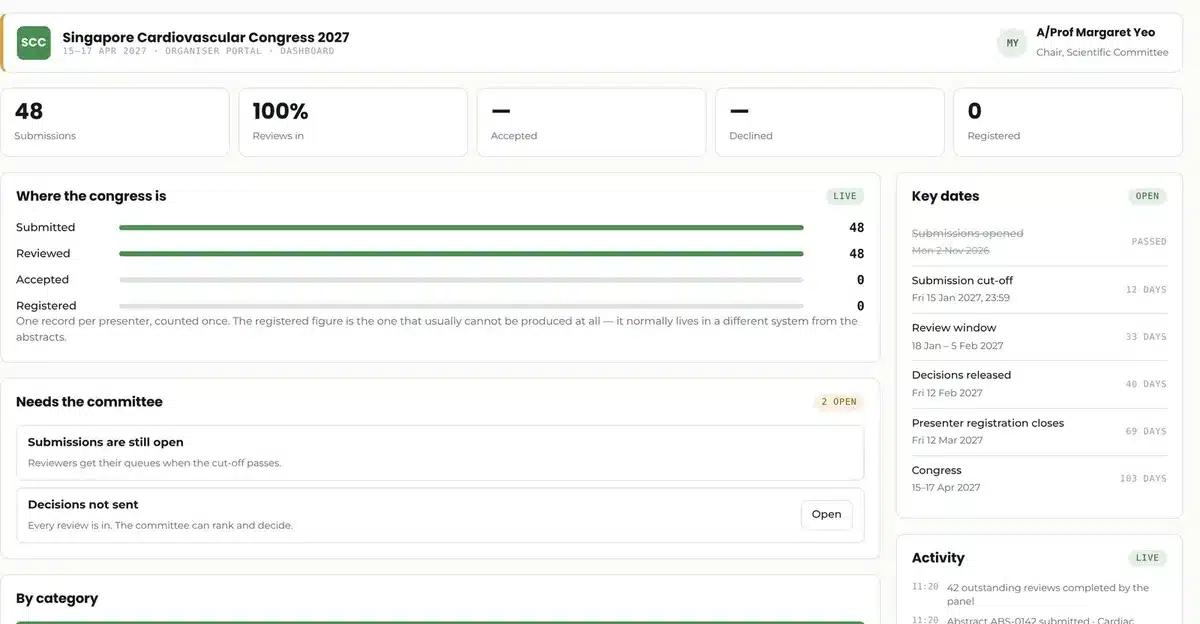
Figure 4. Committee dashboard: submissions, reviews in, decisions and registrations on one screen.
Screens from the Klobbi Abstract demo. The congress, people and institutions are fictional.
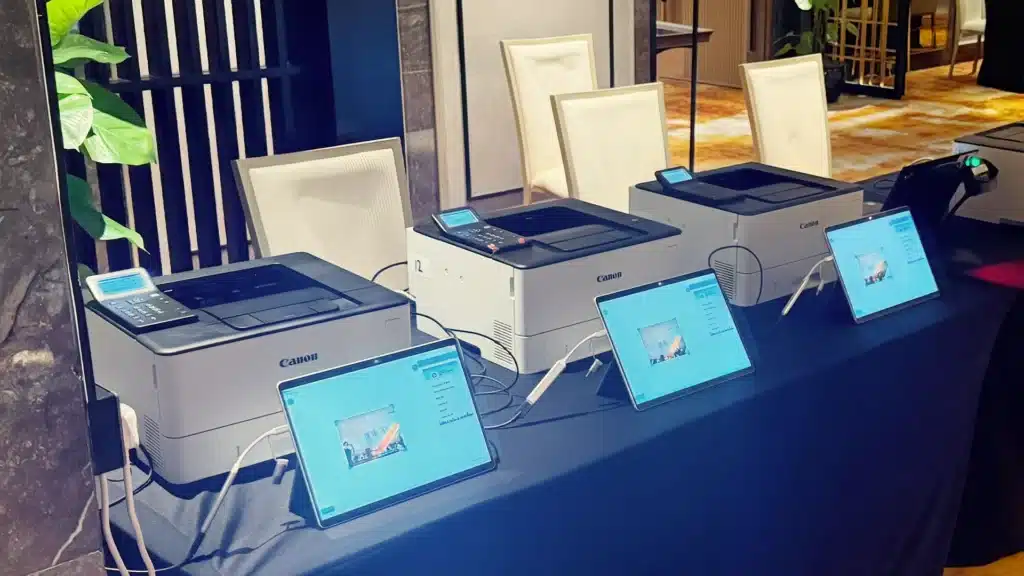
Figure 5. Badge printers and check-in tablets on a Klobbi registration counter.
Accepted isn't the same as registered. In Klobbi Abstract, the acceptance email links back to the presenter's portal, where a presenter ticket is now open to them and to no one else. Name, affiliation and badge name come from the submission, so the presenter checks them instead of typing them again. Payment confirms the slot, and the committee sees who has confirmed.
After the decisions, accepted abstracts can go online as an abstract book and an e-poster gallery, on your congress website or inside Klobbi's virtual venue. Delegates search by category, author and title, and you get viewing reports.
Comments, contact the author, voting and “top picks” competitions are there when you want them.
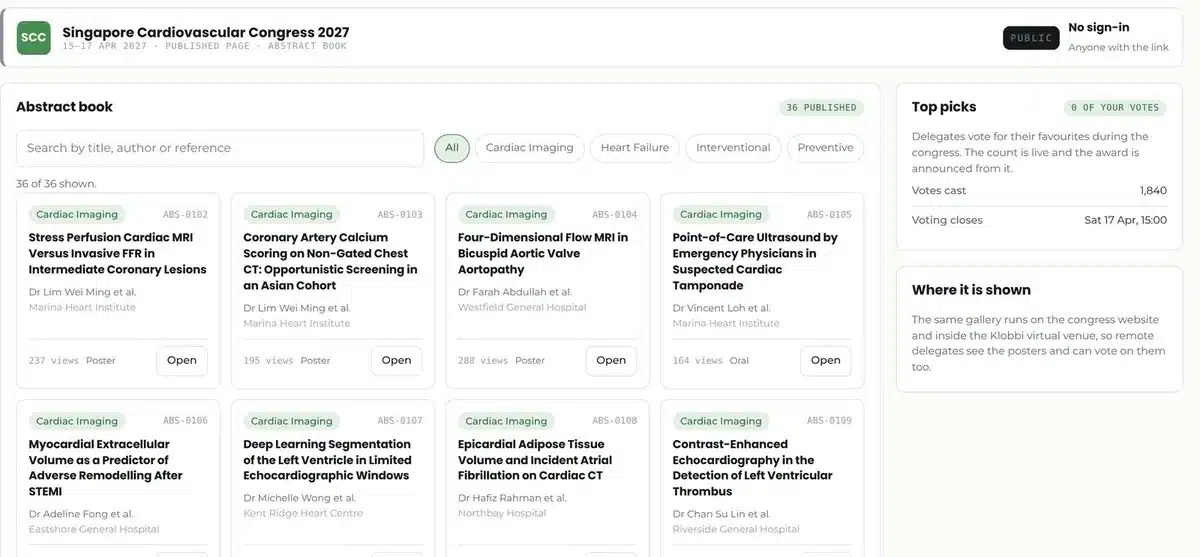
Figure 6. The online abstract book, searchable by title, author and category. Demo data.
The five steps stay the same. What happens inside them is set up for your committee before the call opens.

Figure 7. Your committee sets the rules; Klobbi sets up the portal to match. Photo: Freepik.
As many as your programme needs, each with its own reviewers.
Your rubric, such as originality, method and relevance, or whatever your committee uses.
Author names and affiliations hidden from reviewers.
Your word limit, author fields, presentation types, file uploads and declarations.
Your wording for the confirmation and declination emails.
Your presenter rate, open only to accepted authors.
If your committee runs review rounds, keeps a waitlist or uses other outcomes, tell us how it works and we'll confirm the set-up before your call opens.
Klobbi Abstract was shaped around how medical and scientific committees review, and built for events.
The abstract portal, registration, kiosks, badge printers and on-site crew come from the same team, so presenters never fall between systems.
One person at Klobbi owns your set-up, your dates and your questions, from the call for abstracts to the congress days.
ISO/IEC 27001:2022 certified and CSA Cyber Trust mark (Promoter tier). Under the PDPA, your organisation stays responsible for the personal data in the submissions, and Klobbi processes it for you as your data intermediary.
The submission form, the presenter portal and the cut-off.
Read more →Reviewers by category, blind scoring and committee decisions.
Read more →From acceptance email to presenter badge.
Read more →Search, e-posters, votes and viewing reports.
Read more →Guide: how abstract submission software works, the seven stages of a call for abstracts from the first announcement to presenter registration.
What is abstract management software?
Abstract management software runs a congress's call for abstracts from start to finish. It collects submissions through an online form, assigns them to reviewers, records scores and comments, and sends the committee's decisions. Klobbi Abstract also carries accepted presenters into registration, check-in and badge printing, and can publish the accepted abstracts online.
Who is Klobbi Abstract for?
Scientific, medical and academic congresses and societies: the secretariat that runs the call for abstracts and the scientific committee that reviews it. Klobbi sets it up and supports it from Singapore and Thailand.
Can reviewers score abstracts blind?
Yes. Author names and affiliations are hidden from reviewers.
How are abstracts assigned to reviewers?
By category. Each reviewer is assigned one or more categories, and submissions in those categories go to them automatically. Abstracts in other categories aren't in their account.
What happens after an abstract is accepted?
The presenter gets a confirmation email with a link back to their portal, where a presenter ticket opens at the presenter rate. Their details carry over from the submission. Once paid, the registration syncs to Klobbi's check-in, and the presenter collects a printed badge at check-in.
Can we publish the accepted abstracts online?
Yes, as an online abstract book, an e-poster gallery or both, on your congress website or inside Klobbi's virtual venue. Delegates search by category, author and title, and you get viewing reports.
How much does Klobbi Abstract cost?
We quote per congress, because the price depends on the number of abstracts and categories and on whether registration, check-in and badges are included. Send us your dates and expected submissions and we'll reply within one working day.
Send us your congress dates, the number of abstracts you expect and your categories. We'll show you the author, reviewer and committee views on a call, and reply with a quote within one working day.
WhatsApp +65 8836 2597 Email sales@klobbi.com