
A single sign-up page copes well until the guest list stops being uniform: several audience groups, different details to collect, free and paid places, colleagues booked together, guests who need assistance, or a crowd that all turns up within the same half hour. From there, separate forms, shared spreadsheets and manual edits create extra work for your team and a clumsy experience for guests.
In plain terms, an attendee registration system is the software and process that gathers and organises guest details before an event, then links each person's record to their confirmation, entry pass, on-site check-in and attendance report.
Klobbi adds a delivery team to the software. Rather than leaving you with an empty form builder, we work through who signs up, what each group must tell you, how confirmations should behave, what happens at the venue and which figures your team will want afterwards.
Good registration bends to the guest instead of asking everyone the same thing. Klobbi's event registration platform for Thailand handles custom fields, registration categories and multiple guest types, so you collect what is relevant to each event and each group.
A delegate might give their organisation, role, dietary needs and the sessions they plan to join. A VIP may need a shorter, more personal set of questions. Staff, speakers and members of the public each bring their own requirements.
Klobbi builds branded forms around those differences, trimming questions that do not apply while keeping everything your team needs in one tidy workflow. Forms can run in Thai, English or both for mixed audiences.
This matters most when you need more than a name and an email address, for example organisation, job title, food restrictions, accessibility requests, interests or any detail particular to your event.
Categories decide how each person registers and how their record is treated later. You might separate delegates, invited guests, staff, speakers, VIPs, the general public or any other group that matters to your event.
Ticket types and event-specific settings are supported too, including paid places where needed. The aim is not to add complexity, but to mirror how your event really runs.
When one coordinator signs up a whole team for a conference or programme, the workflow can take a group booking directly, so nobody has to keep a side spreadsheet next to the system.
Agree the rules early: does every guest need their own record, which details are required for each person, who pays and how, and who receives the confirmation and QR code? Those choices shape everything afterwards, from reminder messages to check-in and badges.
As soon as someone submits the form, they should know where they stand. Klobbi sends an automatic confirmation email with a QR code, giving each guest proof of registration and a quick way to be recognised on arrival.
Your team can also schedule automatic notices and reminders from the platform, so pre-event messages stay linked to registration data instead of being sent by hand from several inboxes.
Registration should not go quiet once the Submit button is pressed. The details you gather in advance are worth far more when they keep working on the day itself.
In Klobbi, the same record moves from online sign-up to confirmation, QR pass, check-in, badge and attendance report. Nobody retypes data, and you can see at a glance who booked and who actually came.
Already holding a guest list? Klobbi can import it. Our team helps clean lists with duplicates, mixed formats or competing versions before they reach the registration desk.
Guests complete the right online form and receive an automatic email with event details and their QR code.
Organisers watch registrations and guest details inside the system rather than juggling a spreadsheet for every stage.
At the venue, QR scanning and name search match the person at the door to the record created before the event.
If badges are needed, they are printed at check-in from the guest's record. Attendance status gives you a live view of arrivals during the event and solid reporting once it is over.
An audience registration system applies the same discipline to public programmes, big visitor groups and events where many people sign up or arrive in a short window. The hard part is keeping sign-ups, passes and entry under control as numbers climb, not just collecting names.
Public events need a form that is quick to finish on a phone, clear about what is required and able to issue a working QR pass without creating manual work for organisers. For Thai audiences, a Thai-language form removes a common point where people give up.
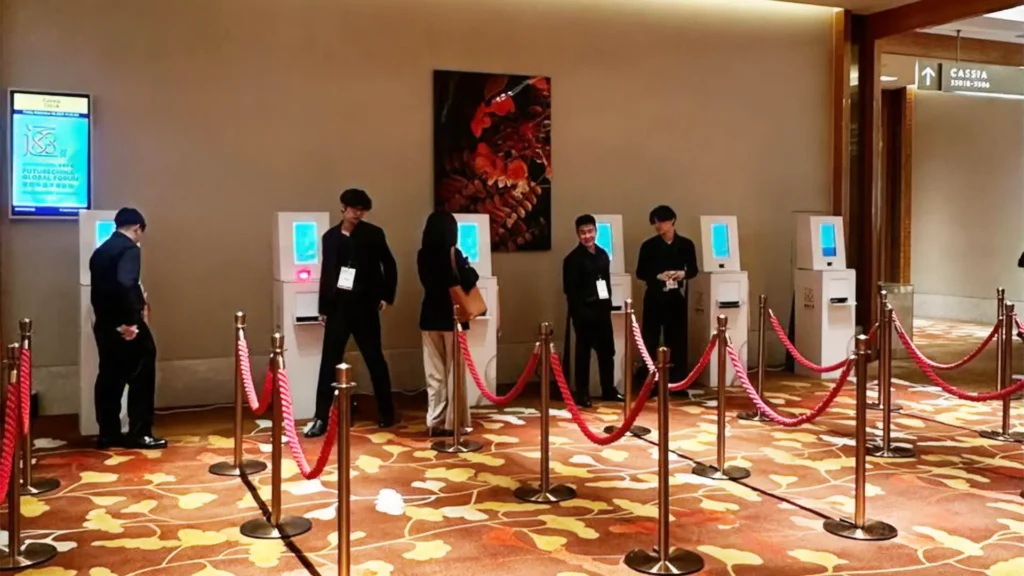
Klobbi pairs online audience registration with the tools you need on the day: QR check-in kiosks, name search, walk-in handling, badges where required and live attendance figures, so the entrance keeps moving and the records stay accurate.
It fits public programmes, sports and community events, exhibitions, large brand activations and any event that needs both a public sign-up page and a dependable hand-over to the venue team.
Event formats name their people differently. “Attendee”, “audience”, “delegate”, “participant” and “guest” often overlap, yet the details and process behind each role can differ a great deal.
Delegates may need to give company, position, dietary or access needs, pass type and preferred sessions. For larger meetings, attendee registration should plug into conference-specific rules without turning the form into a maze.
Where a conference has several delegate groups, pass types or session choices, the record carries straight into Klobbi's conference registration system in Thailand, with no need to rebuild the same data elsewhere.
Company events often mix employees, clients, partners, invited guests and VIPs. The workflow can be shaped around what you need to identify and look after each group, while staying simple for the guest. See corporate meeting registration for internal and invite-only events.
Open events need a fast, phone-friendly route that copes with volume without letting data quality slip. Clear categories, automatic confirmations and QR passes make the move from online to on-site far easier to manage.
VIPs, speakers and crew often need different questions or handling from general guests. Setting them up as their own guest types lets you collect the right details without bothering everyone else with irrelevant fields.
The best registration set-up is the one that still works when guests walk through the door. Klobbi connects registration to the neighbouring tools event teams rely on, so the same information never has to be re-entered somewhere else.
For ticketed or fee-paying events, Klobbi supports online registration with payment in one flow: guests pay by card through an online payment gateway straight after completing the form.
Payment should sit inside the guest journey without confusing it. Form, ticket type, payment status and confirmation work together, so you can see what has happened without reconciling separate systems by hand.
The QR code in each confirmation becomes a quick entry pass on the day. Klobbi's on-site tools cover QR scanning, name look-up and walk-in registration, with live attendance updates throughout the event.
Venue Wi-Fi is not always reliable. Klobbi's check-in keeps running when the connection drops and syncs once it returns, so the welcome desk does not become the first queue of the day.
When the event needs name badges, each one can be printed at check-in from the guest's record, instead of printing everything in advance and sorting piles alphabetically before opening.
Where on-site badges are required, the same record feeds Klobbi's badge printing service in Thailand, so names, categories and approved fields never need a separate print file.
Klobbi also keeps spare printers on hand for event day, so one faulty machine does not stop the whole desk.
Software is only half the job; the way registration is designed matters just as much. Klobbi pairs the platform with a managed delivery process, so you are never left to work out every rule on your own.
We begin with your event, not the form. Who signs up? Which categories exist? What does each group need to provide? Is it free or paid? Will you need QR check-in, badges, session choices, imported lists or links to business systems?
Those answers set the workflow before any design work starts.
Klobbi configures the registration page, forms, custom fields, registration types, branding, confirmations and related requirements, in Thai, English or both, so the result reads clearly on a phone and works for the team running the event.
Every route is tested the way real guests will use it: each guest type, payments where relevant, confirmation emails, QR codes and the hand-over to the venue are checked before launch, not discovered at the desk.
Once registration opens, your team follows sign-ups and guest data while Klobbi's project team looks after the configured workflow. Automatic confirmations and reminders cut down repetitive follow-up.
When you use Klobbi on site, the project continues after online registration closes: QR check-in, name search, walk-ins, badge printing and live attendance pick up where the form left off. In Thailand, our Bangkok team can manage on-site check-in for you.
Afterwards, registration and attendance data are ready for reporting and follow-up, with no need to stitch together separate lists.
Registration means handling personal data, so speed alone is not enough. Organisers need to know what is collected, how it is used during the event, who can access it and what they can report afterwards.
Klobbi's platform gives organisers visibility of registration and attendance data, with reporting and data export. Where business systems are involved, Klobbi also supports CRM, SSO and other integrations scoped to the project.
Klobbi states that guest data is encrypted in transit and at rest, and data-handling arrangements can be documented for procurement teams or data protection officers. The platform is hosted in Singapore, so data may be stored outside Thailand. The software is built by Klobbi Pte Ltd in Singapore, which is certified to ISO/IEC 27001:2022 by TÜV SÜD and holds the CSA Cyber Trust mark at Promoter tier.
Under Thailand's Personal Data Protection Act B.E. 2562 (2019), you as organiser remain responsible for attendees' personal data, and Klobbi processes it on your instructions. If your organisation runs a formal procurement or security review, bring the technical discussion into scoping so data flows, access, integrations and event-specific controls are documented before launch.
For deeper detail on controls, credentials and event-specific data handling, see Klobbi's event registration data security page for Thailand.
A plain online form can be perfectly fine when an event has one kind of guest, a few fields, no payment, no special messaging and no link to the venue.
A managed attendee registration system earns its place once you need several guest categories, custom details, group bookings, payments, QR passes, check-in, badges, large arrival volumes, imported lists, reporting or integrations.
It is not about “more features”. It is about whether registration data keeps working as the guest moves from sign-up to arrival.
With a plain form, organisers usually build the process around the tool. With Klobbi, the process is designed around the event, then delivered through the technology and the people running it.
To see how forms, guest records, payments, check-in and reporting fit together across all event types, visit Klobbi's event registration platform for Thailand or read the event registration software guide.
Why Klobbi
Klobbi starts from a practical belief: event technology should come with people who know what happens before the doors open, and what happens when several hundred guests arrive together.
Klobbi's Bangkok team supports events held in Thailand locally, including on-site check-in management, while the software is developed in Singapore. You can reach the team on LINE or WhatsApp during planning and on the day.
Each project can have a named project manager who handles set-up, testing and delivery with you. On on-site projects, Klobbi staff can run the registration desk, so you are not left with software and a manual.
Registration pages, guest data, QR passes, check-in kiosks, badge printing and post-event reports arrive as connected parts of one project, with software, hardware and on-site staff in a single bundle if you wish. That continuity helps conferences, public-sector programmes, corporate events and busy public events alike.
Fee-paying events can take card payments through an online payment gateway inside the registration flow, with payment status kept on the guest's record.
The ISO/IEC 27001:2022 certificate and CSA Cyber Trust mark held by Klobbi Pte Ltd, the Singapore company that builds the software, give procurement and IT security teams a clearer starting point for vendor checks.
If your organisation already runs business systems, Klobbi can link registration with CRM platforms, SSO, payment gateways and other tools where required, rather than forcing a separate data process.
Registration software has to cope with more than a tidy test event. Klobbi's published work in Singapore includes national programmes, corporate events, conferences and very busy public experiences where registration had to hold up in real operations.
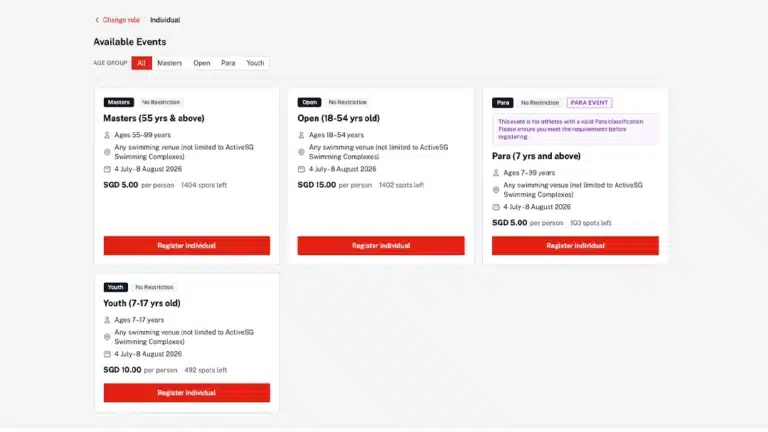
For Pesta Sukan 2026, part of GetActive! Singapore, Klobbi's platform handled close to 50,000 participants across 40 sports and over 1,500 individual sporting events. A programme like that needs far more than one form: participant data must stay organised across many activities and support operations at scale.

For the LKY100 “Now Is Not The Time” exhibition, Klobbi had two weeks to get registration live for a broad public audience, a clear case of why managed delivery matters when deadlines, guest experience and operations must move together.
Both projects show registration as part of the wider operation, not just a form. To plan attendee registration for an event in Thailand, contact Klobbi or message us on LINE or WhatsApp; we reply within one working day.
FAQs
It collects and organises guest details before an event, then passes them on to the steps that follow, such as confirmation emails, QR passes, check-in, badges and attendance reports. More capable systems also handle several guest types, payments, event-specific fields and links to other software.
Ticketing is mainly about issuing or selling entry. Attendee registration goes wider: it gathers event-specific details, sorts guests into categories, manages messages, links records to on-site check-in and supports reporting afterwards. Many events need both within one workflow.
Yes. Klobbi supports custom fields, categories and forms for each guest type, so you can ask delegates, invited guests, participants, VIPs and staff for different details instead of giving everyone the same generic form.
Yes. Klobbi supports group bookings for conferences and other events. Decide the rules during set-up, because you may need a record for each person, shared or separate payment, and different confirmations or badges for each member of the group.
Yes. Klobbi links registration data to QR check-in and on-demand badge printing, so each guest's details carry into event day instead of being typed again at the door.
Only what the event really needs. Typical fields are name, email, organisation, job title, guest category, dietary needs, accessibility requests and preferred sessions. The right set depends on the guest type and the decisions your team has to make.
The terms overlap. “Audience registration” is usually used for public or large-audience events, while “attendee registration” covers conferences, corporate events, public programmes and more. Both aim to capture accurate data and carry it through the rest of the event.
Klobbi handles data with encryption, and the software is built by Klobbi Pte Ltd in Singapore, certified to ISO/IEC 27001:2022 by TÜV SÜD and holding the CSA Cyber Trust mark at Promoter tier. Under Thailand's PDPA, you as organiser remain responsible for attendees' personal data and Klobbi processes it on your instructions. The platform is hosted in Singapore, so data may be stored outside Thailand.